Friday, September 16, 2016
Mekadatu - the goats leap
Wednesday, October 16, 2013
Mutyalamaduvu
It is a beautiful gorge with a sleek little ravine flowing through it and surrounded by lush green forest infested with mischievious monkeys with their devil may care attitude. Although it is a picnic spot you might want to be careful with your food these little devils could gang up on you, so I suggest you have your food before descending the gorge that way you can enjoy the place in peace. The tourisim of Karnataka has provided us with minimum facilities and gazibos to sit and eat.
The stairs leading to the ravine is not long and ends up near the temple of Shiva on the right and a beautiful waterfall that ends up in a little pond. Here the water from the falls slides down the flora of the place creating an illusion of a sting of pearls, hence the name Pearl Valley. The source of this water is the Onakanahalli Tank located nearby.
Monday, April 22, 2013
A trip to Orissa
Usually we were budget travellers, me and my hubby, but this time we decided to indulge a little so though there were many bus services from Bhubaneshwar to konark and Puri we hired an air conditioned taxi. This decision was strongly inspired by the hot and sweaty climate of Orissa. We knew we were taking risk visiting Orissa during summer which is definitely not recommended time, (The best time to visit being in the months of October to March) but it was the only time we could spare. Anyway we did manage to have a great time and the best thing of going on a sunny day is that our photographs were brilliant.
The first day we decided to visit Konark - Puri - Pipli - Dauli.
We put aside the second day for some fun, frolic and some freash seafood at chilaka lake.
The third day is meant for visiting all the temples in Bhubaneshwar - the temple city of India.
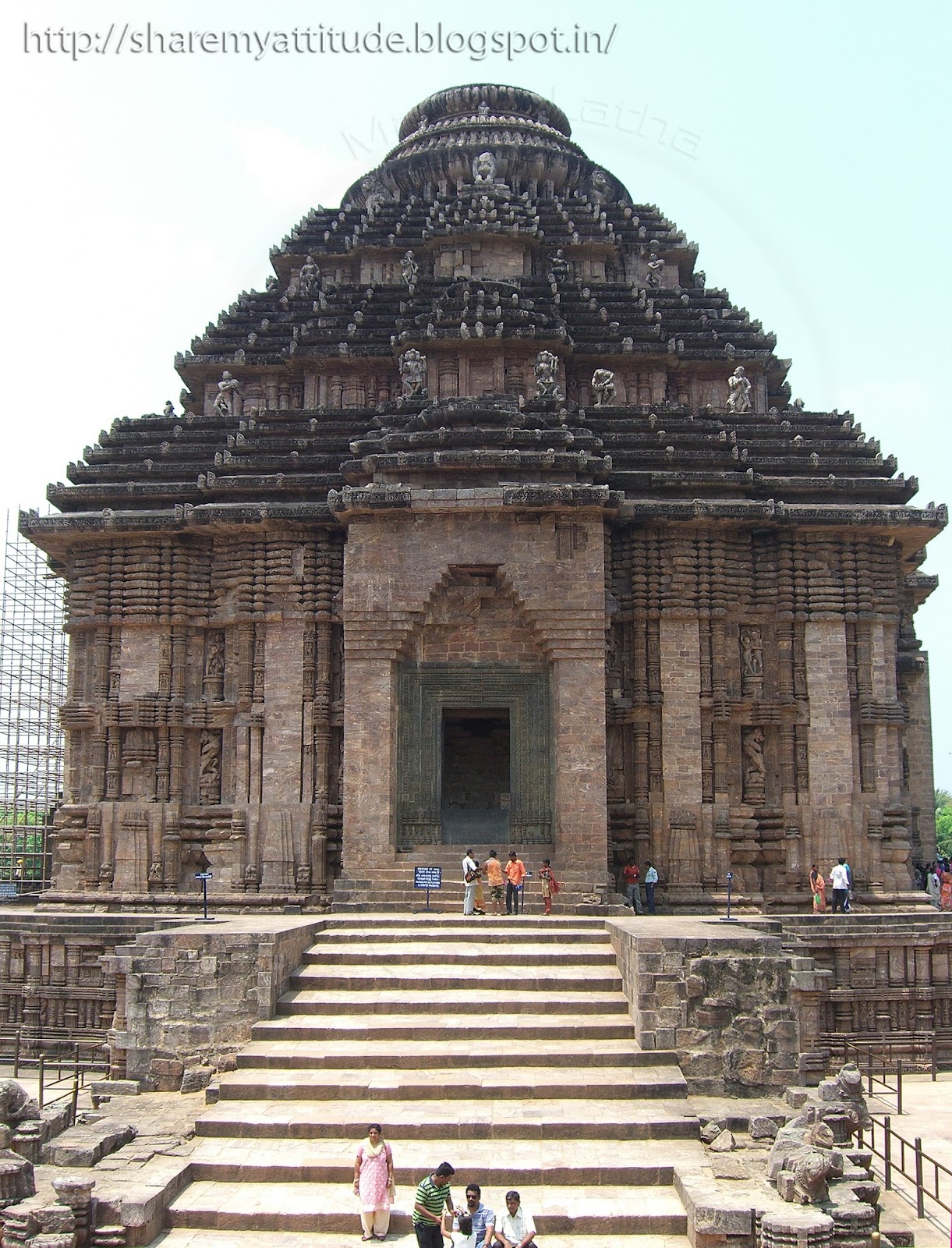
Konark - Temple of the Sun
span style="font-family: Calibri;">Konark is a small town some 30km from Puri and a good 60km from Bhubaneshwar. It is the third point of the golden triangle. Konark is the most visited place of Orissa, as it is the home of one of the most unique temples of India, a sun temple. It is a world heritage site drawing tourists around the world to its exquisite beauty. Indian temples are mostly dedicated to one of the Holy trinity or their avatars but rarely we find temples to other

Our taxi driver left us at the mouth of a narrow lane much
narrowed by the tightly knit stalls on either side. As soon as we elighted the
vehicle auto rickshaw drivers surrounded us offering to take us to the booking
counter of the Sun temple where no four wheelers are allowed, for just a
minimum price of 30/-. Though it would have relived us of a walk in the hot
sun, we preferred to do some window shopping of what’s on display so we decided
to walk down the lane. It was a good idea too, we found out that cashew nuts
are cheaper in this parts and are only 300/- per kg. It was a steal but beware
some cashews may have little worms in them so break the cashew before you eat,
what I did is as soon as I reached home I broke all the cashews and slow
roasted them, that way they will not be spoiled. Anyways back to Konak,... At
the end of the lane we were faced with a ‘Navagraha temple’ sign on the other
side of the road, wondering if this was the entrance to the sun temple we asked
a local vendor. He immediately pointed to the left, to a much bigger
entrance gate where people were chatting
excitedly, indulging in a quick cooldrink or a nibble before entering the
temple. There is an entrance fee of Rs5/- per adult (which may vary if you are
a foreigner), still camera’s are allowed freely while video camera’s are
charged Rs 25/-. We also booked a govt. Recognised guide for Rs150/- who
explained the construction, architectural design of the temple, kings who ruled
and patronized the temple and so on... One thing he said was that the king who
commissioned the building of this temple has a TAIL.
Like many temples in Orissa, the Sun temple of Konark
follows the kalingan school of architecture which commands any temple should
have a inner sanctum or vimana and a outer hall or jahamohana for yagnas and
yagas to be performed. According to tradition the shikara of the inner sanctum
is raised cylindrically while the shikara of the outer hall is in the form of a
stepped pyramid. The inner sanctum which should contain the reigning deity is
razed by Jahangir’s troops and is now empty but the outer hall still remains
tall. Pujas have not been performed in the temple for many decades hence it is
more of a historical ruin than a holy place of worship. But still the temple is
a awe inspiring sight with its majestically shikaras raising to towards the
sky. Huge steps lead up to the temple entrance which is constructed on an
elevated platform of about 12ft high. On the walls of this raised platform is
where all the artistic geniuses of the time worked to chisel immensely
beautiful sculptures, the 12 pairs of wheels. Each stone of granite is
painstakingly sculptured and transformed from boring granite to beautifully
voluptuous women caught on different chores of their daily life. The ‘Natya
Mandir’, opposite the temple is also on an elevated platform, where dances are
performed in honour of the Gods. The Natya Mandapa holds four stout square
pillars all of which are adorned with dancing nymphs in various postures.
Konark is also talked
about, for its erotic sculptures next to the temples of Kajuraho, but it has
more wealth of history to offer to the beholder. A day in the life of the queen
is represented on one of the wheels of the temple, while in another region
aptly capture the life of a commoner. There are carvings that show us how these
huge granite stones are brought in from different parts of the kingdom and how
the whole family of the artisan travelled along with the stones cooking,
cleaning, raising kids and living life on the road. While another part of the
temple wall depicts the great pomp and celebration that escorted the king in
all his grandeur while he was leaving for a hunt. Another stretch of sculptures
show us how traps are used to capture elephants. There are also depictions of
how the rocks are pulled on logs and carried to such heights to make the temple
the magnificient structure that we see today. A trip to Konark will be the highlight
of your journey and a jewel of an experience in your life. Tuesday, November 8, 2011
Mysore Palace
The palace from the front.
The statue of lions that adore the palace grounds.
But these days the Main entrance is not used, instead the Eastern entrance is used for the public entry. There is a temple to the right side where the royalty has been paying obeisance for ages. Those majestic domes can be seen from this view. Cameras are not allowed inside the palace so they
can be safely deposited at a counter near the entrance. There is always a rush at the entrance also footwear is prohibited inside the palace. there is another stall that accepts footwear near the entrance of the palace. We can also find audio guides for a price in this place, if you are interested to know more
about the palace. We enter into the palace and parade of miniature
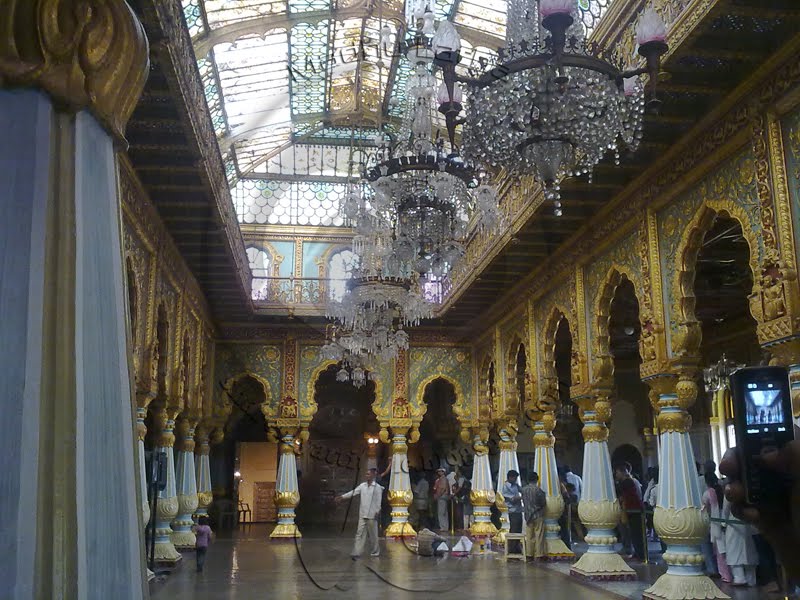
models welcomes us. On the sides of the entry door we find enormous stuffed elephant head looking malicious even in death. we enter to a grand atrium with tall columns and a painted glass dome. The dome is
beautifully decorated with colorful peacock feathers and other paints. This is once used for the wedding ceremony of the royals. The walls of this enormous hall are decorated with intricate paintings of the famous Dasara/Dussera festivities for generations. We can see see different chariots bearing the royals and other aristocrats in procession, drawn with horses and elephants.