Showing posts with label Temple. Show all posts

Friday, July 14, 2017

Kotilingeshwara Temple - The temple with many Lingas

When you are taking a trip with your family, especially the elderly you tend to look to go to a place which would accommodate all their needs. Most elderly tend towards visiting a temple more than anything so were we when when we decided to go to Kotilingeaswara Temple which is only around 100km. (approximately) from Bangalore. We started in early after (packing our lunch and snacks ofcourse) as we were travelling with our 2 year old kid and our 60 over mother-in-law. This is a place where there are no stairs to climb or distances to walk so its ideal for a whole family, When you are travelling with kids it is always advisable to carry a few eatables since you cannot be sure of hygienic food. It took us more than three hours to reach the temple and it is not because of the road not being good but the opposite. The NH75 makes for a smooth ride, uninterrupted except for the occasional trucks and container lorries that we could see on the road. The road snakes between rocky hills that offer picture perfect vistas. The boulders on these tiny hills look like a gaint's baby has been playing marbles and heapead them up in little piles. We had to stop to take in the scenery.


When we finally arrived at the temple we found that it was not as deserted as one would expect a temple in a tiny little village to be. In fact the whole area was bustling with activity, they had a huge parking area that could accommodate atleast 50 four-wheeler easily which tells us that the temple expects huge crowds. There were colorful little stalls aligned on either side of the pathway to the temple selling an array of items including earthen lamps with ghee, apparently it is good to light a Ghee lamp in the presence of the Lord. We bought one and were on our way. There is a 20/- ticket for adults and a 50/- charge for the cameras. Its a good thing they allowed cameras because I love clicking pics and when I go to places where they do not allow them I feel like I am missing something. (That is how much the camera means to me now, my husband keeps telling me I should put it down for a minute and enjoy the scenery for once, but my mind always wants to get back behind the lens and capture every moment, that is why we have great shots of my kid praying to every Lingam in the place. It was ADORABLE.)


The sight that welcomed us on entering the gate was a court yard full of multicolored platforms covered with Siva limgams of all shapes and sizes. To a common viewer the sight is delightful, but to a devotee of Shiva this will your heart with joy. There are hundreds of Shiva lingams everywhere you see, arranged in rows and rows, adorned with kumkuma, pasupu and flowers.


There are a group of temples dedicated to different Gods and Godesses including the famous Sri Manjunatha temple where we offered our obeisance and the lit the ghee lamp. Then we open up in to a huge court yard that spreads around a few acers filled with more and more Shiva Lingams.

 This is where we find the huge granite Lingam reaching for the sky. Although we find that the Nandi standing in the Lord's presence is not up tot the mark, it does have the desired effect when you look it as a whole.


The different kinds of Lingams we find here are quiet variable and facinating.


Right outside the premisis of the Kotilingeshwara temple is the temple of the local deity with a idol fierce and awe inspiring and a bed of marigold crop in-front of the temple.


teluguvaramandi.net and teluguvaramandi blog

Wednesday, April 24, 2013

Puri - The land of the Lord


We started for Puri at 7:30 in the morning and reached it at around 9:00. Our trip advisor suggested we visit Puri first. May be he thought it was good to visit the temple in the morning or may be, he must have thought with fresh mind and body we will be more forgiving of the shabby state of affairs at the state’s most sacred temple. Puri Jagannattha temple, the pride of Orissa is a revered place not only for the people of Orissa but all the Vaishnavites around India. It is one of the ‘Char dham’ (Badrinath, Rameshwaram, Dwaraka, Puri) piligrimage a hindu is expected to make at least once in a life time. I have come to expect more from such a pilgrimage centre, but was disappointed to find it in such a pitiful state. Lack of proper information is one of the major concerns. Non-Hindus are not admitted into the temple. On reaching the temple we found that no mobile phones, cameras, handycams, umbrella’s or even water bottles are allowed inside the temple. Well and good, but they failed to provide a good locker facility, as tourists we were carrying all these things and when they asked to leave these things with some undesignated people outside the temple, who kept them in ragged old sacks along with our slippers. The people who are appointed to take care of the valuables were properly named or designated or at least wearing a shirt, so pardon me for not feeling safe to leave all my valuables to them.

Then there is a NO ENTRY sign at the front entrance and nowhere that says how to enter the temple. After enquiring several police and security officials whose knowledge of English was practically nil, with some broken Hindi we managed to find out that there are two more entrances to the north and south of the temple high walls. As we entered the temple through the northern entrance the first sight we encountered was that of ‘bats’. Would you belive it! Bats in a temple! that is still receiving pujas regularly. A few focused lights in strategic locations could have eradicated the problem, but I guess the famous temple is little low on funds to spare for a few bulbs. The path leading to the main temple is sticky with spilt ‘bhog’ (the holy rice offering). When we finally reached the temple our view to the Lord was obstructed by a group of people and priests animatedly debating on some issue, completly ignoring that they were inside the temple complex and are causing great in convenience to the piligrims. When the voices began to raise we tried to enquire some novice priests about the issue, but due to language problem we were unable to understand them then we asked them how we were supposed to see the Lord with people standing there. At that point someone, very rude mannered fellow started pointing at the exit and kept pointing in another direction. We were disgruntled to be shown out of the temple without seeing the Lord. But it turned out that he was pointing us to another door to the sanctum sanctorium from where we were able to see Lord Jagannatha in full view. This was one of the instances which make us rethink our own view of the world around us. We thought the person to be rude but all he was doing was trying to do was steer us away from trouble and point us in the right direction. Thank you Lord for a well deserved lesson, we learn something every day.

All in all Puri was a rollercoaster of experiences. We go in expecting a grand experience but are faced with a humble temple complex with very little pretension, surrounded with quiet many minor temples. But the larger than life idol of the Lord was awe inspiring. When we entered through the south entrance my gaze immediately fell on the dark looming figure way right in the sanctum sanctorium. The idol of Lord Krishna or Lord Jagannatha as he is called here, with wide penetrating sight immediately captures our utmost attention. Every temple has its own customs and traditions, here in the Jagannatha temple devotees raise both their hands towards the heaven and praise the Lord calling out ‘Jai Jagannatha’. The comparatively shorter figure to the left of Lord Jagannatha is that of Subhadra and to her right is the imposing figure of Bala Bhadra (Balarama), who is considered as an image of Lord Shiva. Hence they proudly present to us a temple which holds the Siva Kesava in the same sanctum sanctorium.

Together the triad of brothers and sister are the reigning deities of this holy land. Each year they are honoured by a grand festival called Jagannatha Rath Yatra in the month of June which attracts a lot of tourists and piligrims alike. Each year many logs of wood is gathered here to build a grand chariot (Rath) for the honourary deities visit to the city. Millions of people pour into the city of Puri for a glimpse of deities on their outing. The wood that is used for the chariot is the one that is used to to cook bhog around the year for the Lord. Though the excursion merely stretches to the end of the grand avenue called the ‘Bada Danda’ right in front of the temple. The preparation of bhog is also a must see event. Earthen pots of different sizes are piled up one over the other and get the food in all the pots is cooked evenly and at the same time.

Travelling with my husband is a challenge on its own. Being a typical South Indian he prefers, no, insists on having rice for his lunch and dinner, moreover being a vegetarian his choices of restaurants fall from many to quite a few. Though he loves sweets, he will not tolerate any amount of sweetness in his curries or dal, so I always keep a lookout for restaurants, which could accommodate at least a few of his requirements. A fellow passenger from our train journey to Orissa was a South Indian like us now residing in Orissa. He suggested that we should stick to tiffin, snacks or Chinese because we will not find Orissan meals to our taste. So when I spied ‘Hotel Grand’ a few yards away from the temple on the first floor of a shopping complex. I immediately steered my husband in that direction. The air conditioned room room was a welcome relief on a hot day. Though they did not have tiffin there was a limited selection of Chinese so we ordered fried rice and curd rice. The fried rice was good but the curd rice was a bit sweet and then we understood why Reddy sir told us we might not enjoy Orriyan food. It was always sweet. Oriyans prefer sweets. Their Rasgullas are finger licking good. So good, that it is said that even Lord Jagannath offers Lakshmi Devi to enter the temple. Truly the favourite of the Gods. They enjoys healthy amount of sweets in their diet, well... who doesn’t; but they also have a thing for sea food maybe not near the temple. To enjoy the sea food of Puri we need to head towards Puri beach.

Puri beach is a busy area bustling with hawkers with strings of pearls of all shapes and sizes, (which could be original or cultivated) gem stones, souvenirs made of sea shells, conches, little replicas of the Puri temple, models of the famous wheels of Konark temple, hand bags, applique work umbrellas and wall hangings. It is difficult to find peaceful stretch of beach in Puri so if you want to have a peaceful beach experience head towards Konark....


teluguvaramandi.net and teluguvaramandi blog

Monday, April 22, 2013

A trip to Orissa

A trip to Orissa meant a visit to the golden triangle Bhubaneshwar - Konark - Puri. As I considered the itinerary of various tour packages online before planning this trip, I found out that most tour packages suggested that we arrive at Bhubhaneshwar, and proceed to Puri visiting Dauli and Pipli enroute and stay in Puri for the night. But we decided to stay in Bhubaneshwar for the whole trip and visit all the places from there as it takes a maximum of 2 hours to reach Chilaka lake which is the farthest place on our itinerary. We used to start at 7:30 in the morning to avoid the rushhour traffic and used to return before dark.
Usually we were budget travellers, me and my hubby, but this time we decided to indulge a little so though there were many bus services from Bhubaneshwar to konark and Puri we hired an air conditioned taxi. This decision was strongly inspired by the hot and sweaty climate of Orissa. We knew we were taking risk visiting Orissa during summer which is definitely not recommended time, (The best time to visit being in the months of October to March) but it was the only time we could spare. Anyway we did manage to have a great time and the best thing of going on a sunny day is that our photographs were brilliant.

The first day we decided to visit Konark - Puri - Pipli - Dauli.
We put aside the second day for some fun, frolic and some freash seafood at chilaka lake.
The third day is meant for visiting all the temples in Bhubaneshwar - the temple city of India.

teluguvaramandi.net and teluguvaramandi blog

Konark - Temple of the Sun


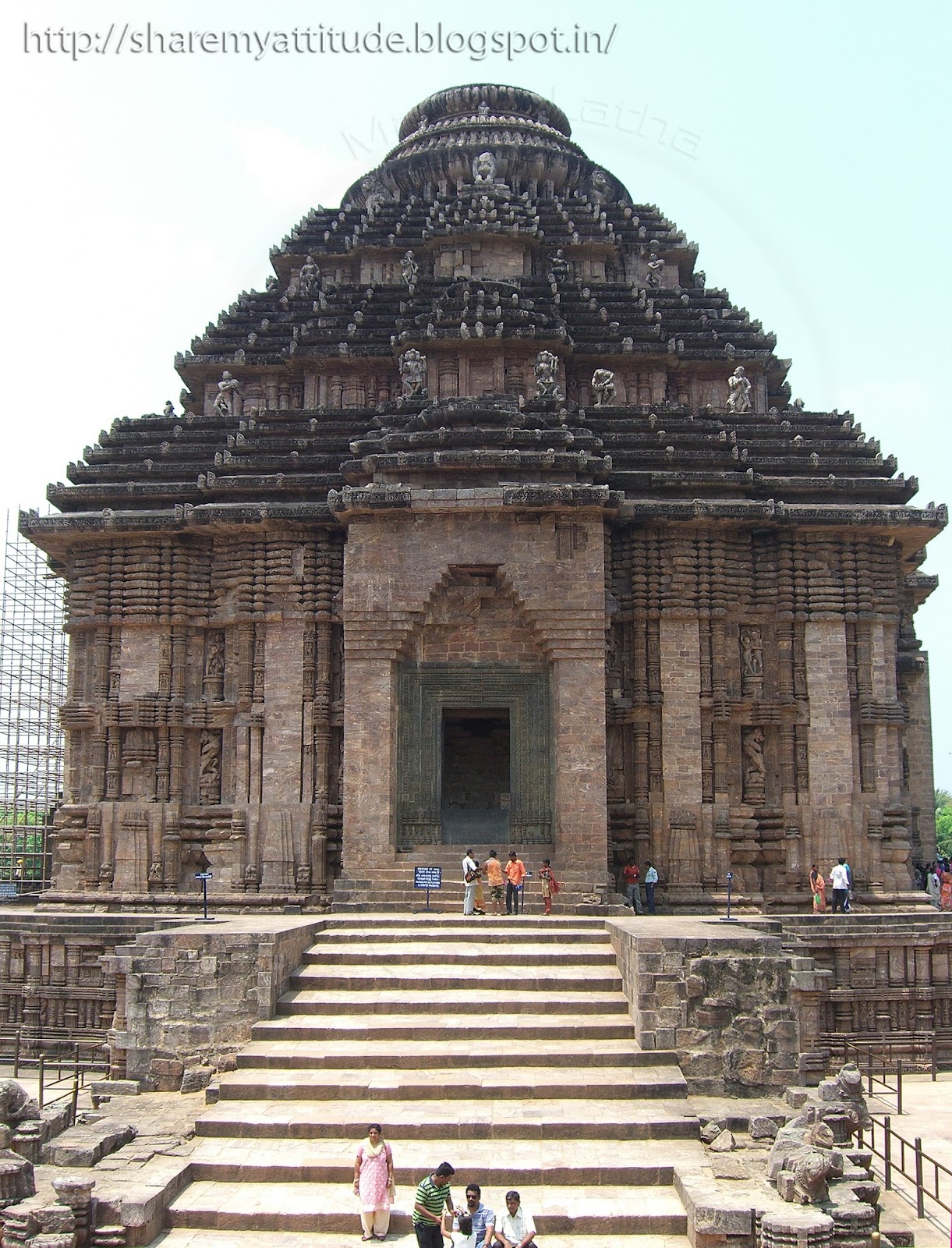
span style="font-family: Calibri;">Konark is a small town some 30km from Puri and a good 60km from Bhubaneshwar. It is the third point of the golden triangle. Konark is the most visited place of Orissa, as it is the home of one of the most unique temples of India, a sun temple. It is a world heritage site drawing tourists around the world to its exquisite beauty. Indian temples are mostly dedicated to one of the Holy trinity or their avatars but rarely we find temples to other

Gods. The sun temple is rare cause it is dedicated to the sun God, Surya and such temples are very few are could be counted on fingers. But the appeal of the temple lies in its architecture and sculptures that embellish its beauty.  The temple is built to serve the Sun God who is always represented on his unending journey on his chariot, hence the whole temple is constructed in the form of a chariot with seven horses tied drawing the chariot, which represent the seven days of the week and 24 wheels of the chariot, representing the 24 fortnights that form an year. Since a month is divided (according to hindu calender) into two ‘pakshas’ or fortnights. The walls of the temple are adorned with surya in his infant, youth and adult stages representing the sun at different times of the day. Before I go any further in describing the incredible beauty of the temple I would like to start with us arriving at Konark.

Our taxi driver left us at the mouth of a narrow lane much narrowed by the tightly knit stalls on either side. As soon as we elighted the vehicle auto rickshaw drivers surrounded us offering to take us to the booking counter of the Sun temple where no four wheelers are allowed, for just a minimum price of 30/-. Though it would have relived us of a walk in the hot sun, we preferred to do some window shopping of what’s on display so we decided to walk down the lane. It was a good idea too, we found out that cashew nuts are cheaper in this parts and are only 300/- per kg. It was a steal but beware some cashews may have little worms in them so break the cashew before you eat, what I did is as soon as I reached home I broke all the cashews and slow roasted them, that way they will not be spoiled. Anyways back to Konak,... At the end of the lane we were faced with a ‘Navagraha temple’ sign on the other side of the road, wondering if this was the entrance to the sun temple we asked a local vendor. He immediately pointed to the left, to a much bigger entrance  gate where people were chatting excitedly, indulging in a quick cooldrink or a nibble before entering the temple. There is an entrance fee of Rs5/- per adult (which may vary if you are a foreigner), still camera’s are allowed freely while video camera’s are charged Rs 25/-. We also booked a govt. Recognised guide for Rs150/- who explained the construction, architectural design of the temple, kings who ruled and patronized the temple and so on... One thing he said was that the king who commissioned the building of this temple has a TAIL.

Caught your attention didn’t I, well I was also curious at this statement but turns out the story is not that fascinating. The king of Konark suffered from an elongated spine which caused him great discomfort, he was unable to sit, stand straight or perform any chores that are expected of him as a king and a husband to add to this humiliation his people started calling it a tail. When the king consulted his royal priests they suggested that he should appease the Sun God and receive his blessing, so began the construction of the Sun temple.

Like many temples in Orissa, the Sun temple of Konark follows the kalingan school of architecture which commands any temple should have a inner sanctum or vimana and a outer hall or jahamohana for yagnas and yagas to be performed. According to tradition the shikara of the inner sanctum is raised cylindrically while the shikara of the outer hall is in the form of a stepped pyramid. The inner sanctum which should contain the reigning deity is razed by Jahangir’s troops and is now empty but the outer hall still remains tall. Pujas have not been performed in the temple for many decades hence it is more of a historical ruin than a holy place of worship. But still the temple is a awe inspiring sight with its majestically shikaras raising to towards the sky. Huge steps lead up to the temple entrance which is constructed on an elevated platform of about 12ft high. On the walls of this raised platform is where all the artistic geniuses of the time worked to chisel immensely beautiful sculptures, the 12 pairs of wheels. Each stone of granite is painstakingly sculptured and transformed from boring granite to beautifully voluptuous women caught on different chores of their daily life. The ‘Natya Mandir’, opposite the temple is also on an elevated platform, where dances are performed in honour of the Gods. The Natya Mandapa holds four stout square pillars all of which are adorned with dancing nymphs in various postures.

Temple of Sandhya (Surya's wife)
Konark is also  talked about, for its erotic sculptures next to the temples of Kajuraho, but it has more wealth of history to offer to the beholder. A day in the life of the queen is represented on one of the wheels of the temple, while in another region aptly capture the life of a commoner. There are carvings that show us how these huge granite stones are brought in from different parts of the kingdom and how the whole family of the artisan travelled along with the stones cooking, cleaning, raising kids and living life on the road. While another part of the temple wall depicts the great pomp and celebration that escorted the king in all his grandeur while he was leaving for a hunt. Another stretch of sculptures show us how traps are used to capture elephants. There are also depictions of how the rocks are pulled on logs and carried to such heights to make the temple the magnificient structure that we see today. A trip to Konark will be the highlight of your journey and a jewel of an experience in your life.


teluguvaramandi.net and teluguvaramandi blog


Tuesday, October 2, 2012

Friday, October 14, 2011

Second Cave Temple of Badami


The second cave is dedicated to Vishnu in his Varaha and Vamana avataras. The cave has a verandah and ascending a few steps is the pillared hall and a sanctum santorium cut out into the cliff from the rear wall of the cave temple. In the outer walls of the verandah we find two dwarapalakas standing with lotus flowers in hand, and are flanked by a women at the bottom. The symbolism used by the crafters while depicting men, women, ganas or animals in smaller sizes might be to show their stature hence they could be servants or helpers.

As we enter the pillared hall we find the sculptures of Bhuvaraha to our right and that of Trivikrama to our left. Varaha Swamy is the Deity worshipped by the Chalukya Kings and is the emblem and royal seal. According to legend Vishnu in the form of Varaha (A boar) rescued Prithvi (Earth) lifted the Earth out of the ocean. Here Earth is depicted as Prithvi maata (Mother Earth) hence we can find Varaha swamy sculpture holding up  a lady, while  celestial beings watch him reverently.

The wall on the other side of the pillared hall is adorned with the depiction of a detailed story of Vamana avatar of Vishnu. Vishnu in his dwarf form went to the asura king Bali and asked him for dakshina (offering to a brahmin) while the king was performing a yagam. The king was obliged to grant him dakshina as he asked for them at such an auspicious occassion. The king who was resourceful and prosperous didn't think twice in granting the dakshina of a dwarf brahmin's choice of three foot land. As soon as the king agreed Vishnu in the form of a dwarf brahmin assumed a gigantic form and placed one foot on the Heavens and one on the Earth and asked Bali where he should place the third foot for which Bali bent down humbly on his knees and offered his head on which Vamana kept his third foot.

The sculpture depicts the whole story in one scene where we can see Vamana as a dwarf with a bowl in his right hand and an umbrella in his left. King Bali promising his dakshina by offering water from his kalasa. Then Vishnu assuming his gigantic form and extending his feet. Finally Bali admitting his frailty and submitting to Vishnu by clinging to Vishnus leg.


The ganas appear in different postures as musicians and dancers celebrating.


Celestial couple depicted in the ceiling of the Cave 2


 Design of Swastiks on the ceiling

Vishnu riding on Garuda 

 Depictions of Brahma, Vishnu and Siva,

 Bead and Flower designs embossed on to the faces of the pillars.


 Flower and Fish design on the ceiling                                             Celestial couples depicted on the face  of the pillars.
 Towards Cave 3

Madhu Latha (Dogiparthi) Srungavarapu